Wednesday, 18 December 2013

History of England


In 1066, the Normans invaded and conquered England. The Norman Dynasty established by William the Conquerer ruled England for over half a century before the period of succession crisis known as The Anarchy. Following the Anarchy, England came to be ruled by the House of Plantagenet, a dynasty which also had claims to the Kingdom of France; a succession crisis in France led to the Hundred Years Wars, a series of conflicts involving the peoples and leaders of both nations. Following the Hundred Years Wars, England became embroiled in its own succession wars; the War of the Roses pitted two branches of the House of Plantagenet against one another, the House of York and the House of Lancaster. Henry Tudor ended the War of the Roses and established the Tudor dynasty.

The territory that now constitutes England, a country within the United Kingdom, was inhabited by ancient humans 800,000 years ago as the discovery of flint tools at Happisburgh in Norfolk has revealed. The earliest evidence for early modern humans in North West Europe is a jawbone discovered in Devon at Kents Cavern in 1927, which was re-dated in 2011 to between 41,000 and 44,000 years old. Continuous human habitation dates to around 12,000 years ago, at the end of the last glacial period. The region has numerous remains from the MesolithicNeolithic, and Bronze Age, such as Stonehenge and Avebury. In the Iron Age, England, like all of Britain south of the Firth of Forth, was inhabited by the Celtic people known as the Britons, but also by some Belgae tribes (e.g. the Atrebates, the Catuvellauni, the Trinovantes, etc.) in the south east. In AD 43 the Roman conquest of Britain began; the Romans maintained control of their province of Britannia through to the 5th century.
The end of Roman rule in Britain enabled the Anglo-Saxon settlement of Britain, which is often regarded as the origin of England and the English people. The Anglo-Saxons, a collection of various Germanic peoples, established several kingdoms that became the primary powers in what is now England and parts of southern Scotland. They introduced the Old English language, which displaced the previous British language. The Anglo-Saxons warred with British successor states in Wales, Cornwall, and the Hen Ogledd (Old North; the Brythonic-speaking parts of northern England and southern Scotland), as well as with each other. Raids by the Vikings were frequent after about AD 800, and the Norsemen took control of large parts of what is now England. During this period several rulers attempted to unite the various Anglo-Saxon kingdoms, an effort that led to the emergence of the Kingdom of England by the 10th century.
Under the Tudors and later Stuart dynasty, England became a world colonial power. During the rule of the Stuarts, England fought the English Civil War, which resulted in the execution of King Charles I and the establishment of a series of republican governments, first a Parliamentary republic known as the Commonwealth of England, then as a military dictatorship under Oliver Cromwell known as The Protectorate. The Stuarts were restored to the throne in 1660, though continued questions over religion resulted in the deposition of another Stuart king, James II, in the Glorious Revolution. England, which had conquered Wales in the 12th century, was united with Scotland in the early 18th century to form a new sovereign state called Great Britain. Following the Industrial Revolution, Great Britain ruled a worldwide Empire, the largest in recorded history. Following a process of decolonisation in the 20th century the vast majority of the empire became independent; however, its cultural impact is widespread and deep in many countries of the present day.

Source: Wikipedia

Phonology


1. Menurut Harimurti Kridalaksana dalam Kamus Linguistik:
Phonology 'fonologi' : British term
Phonemis 'fonemik' : American term
Fonologi merupakan bidang dalam bahasa linguistik yang menyelidiki bunyi-bunyi bahasa menurut fungsinya.
Fonetik merupakan ilmu yang menyelidiki penghasilan, penyampaian, dan penerimaan bunyi bahasa; ilmu interdisipliner linguistik dengan fisika, anatomi dan psikologi.

2. Menurut Hartman & F.C. Stork, M.A., Ph.D dalam Dictionary of Language and Linguistic:
Phonology is the study of speech sound of given language and their function within the sound system of a language.
Phonetic is the study of speech processes, including the anatomy, neurology and phatology of speech, the articulation, classification and perception of speech sounds.

Undang-undang ITE

UNDANG-UNDANG ITE

How to Speak in a British Accent

Accents that are particular to England, Scotland, Northern Ireland and Wales are each different and with practice you can begin to talk with one that sounds genuine. Along with the accents are mannerisms that you will need to assume to affect the part. The following directions may describe Queen's English or "Received Pronunciation" (RP) spoken in south England and Wales, rarely ever used in the modern-day United Kingdom, but the foreigners' stereotypical view of how the British talk. This study of RP is concerned largely with pronunciation, while study of the standard language is also concerned with matters such as correct grammar, more formal vocabulary and style.
This video may help you to speak in a British accent.


Source: Wikihow.com

Friday, 13 December 2013

Gerund

The Simple Gerund

The gerund is the -ing form of the verb used as a noun. Notice that the gerund has the same form as the present participle. However, it functions differently in the sentence. It is always a noun and can function in any noun position.

Swimming is good exercise. (subject)
My favorite sport is swimming. (subjective complement)
Joel an Patrice enjoy  dancing. (direct object)
I am tired of camping. (object of a preposition)
Joel's favorite sport, fishing, is becoming expensive. (appositive)

The Gerund Phrase

While a gerund functions as a noun, it also retains some of the characteristics of a verb. Although it may have adjective modifiers like a noun (usually before it), it may also have adverbial modifiers lika a verb (usually after it). If a noun or pronoun precedes a gerund, it must be in the possessive, or adjectival, form. In this section, the gerund phrase is italicized; the simple gerund is underlined.

Your singing is beautiful.
Everyone admires Patrice's expert dancing.
I appreciate Patrice's going to the hospital with me.

The gerund can be the object of a verb or a preposition. It can also have an object. In fact a gerund can be the object of another gerund, of a participle, or of an infinitive.

Making model airplane is a good hobby for young children.
Practicing diving is a favorite pastime of many swimmers.

The simple gerund and its object(s) and modifiers make up the gerund phrase. Study the foregoing example and be sure you can identify each gerund, object, and modifier.

Source: Let's Write English. By: George E. Wishon and Julia M. Burks.

Saturday, 7 December 2013

Pentatonix

Pentatonix is an American a cappella group of five vocalists, Scott Hoying, Kirstie Maldonado, Mitch Grassi, Avi Kaplan and Kevin Olusola, originating from ArlingtonTexas. The group won the third season of The Sing-Off on NBC, singing an a cappella arrangement of "Eye of the Tiger", originally performed by the band Survivor, as their victory song. Pentatonix won $200,000 and a recording contract with Sony. Their 2012 debut EP, PTX Vol. 1, charted at #14 on the Billboard 200, and their 2013 release, PTX Vol. 2, debuted #10 on the Billboard 200. Pentatonix is currently preparing for their worldwide tour in 2014.
If you want to know more about them, just visit their official website HERE.

Source: Wikipedia

Tuesday, 3 December 2013

Drama

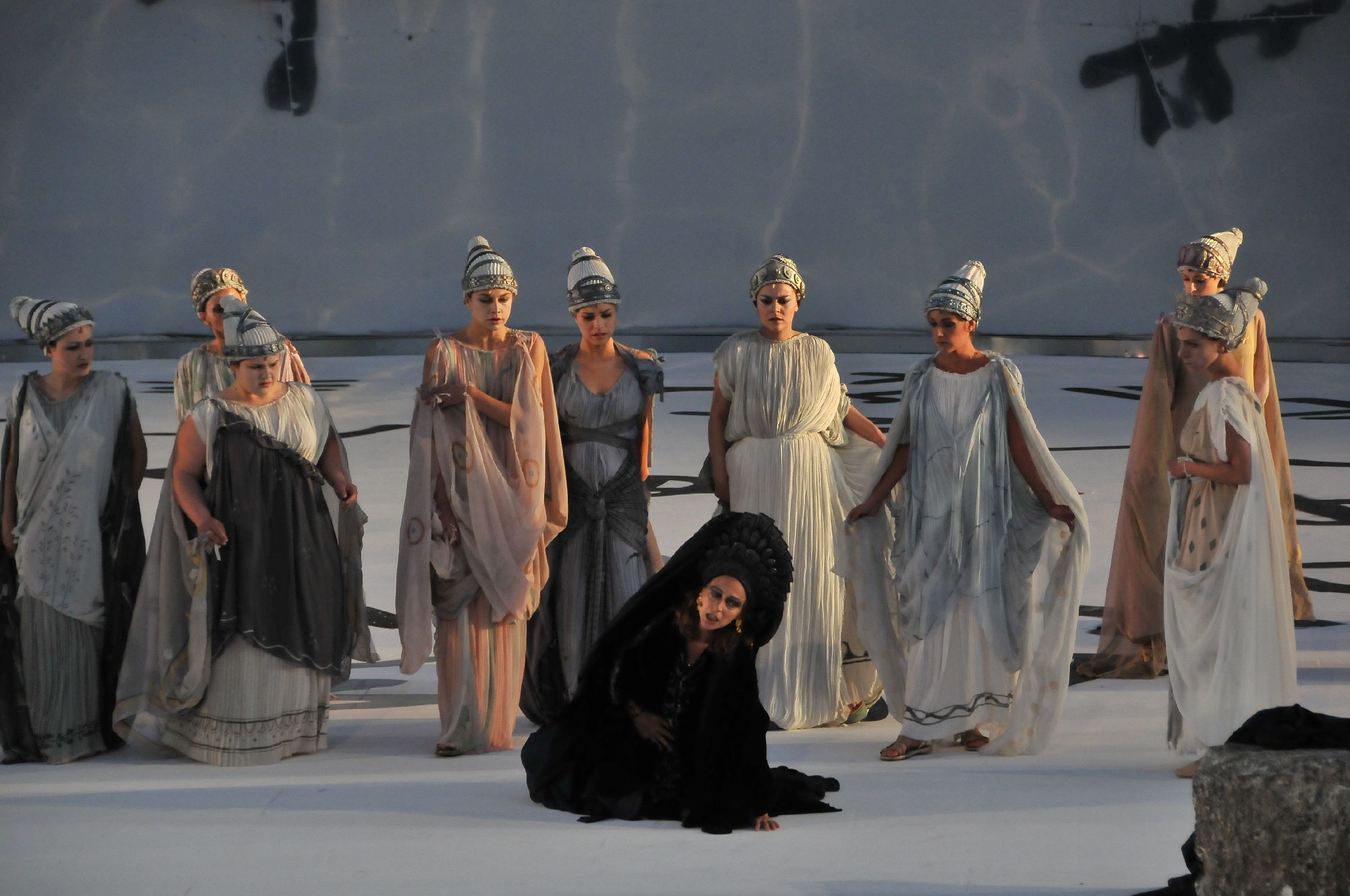
Drama is a form of literature intended for performance by actors. In general the subject matter is narrative in character and, in the type of story traditionally considered suitable for presentation on the stage, the interplay of opposing elements usually results in a conflict. In European drama the phases of this situation are generally depicted in a sequence of scence arrenged so that each is the consequence of the preceding, until the conflicting elements reach a point of climax, after which the conflict is resolved and the play ends. This principle of design, sometimes attributed to Sopchocless, corresponds with te general norms of storytelling in Europa. In Asia acceptable modes of narrative are simpler. Eastern plays are often tissues of episodes connected chiefly by the presence of the principal characters, without any special terminal princple.
In ancient Athens the word "drama" (from dram, "to do") would recall the distinction between (the "thing done") in the course of the Eleusinian mysteries, and the mytos (the "thing said"). Ancient Greek drama never lost its connection with the cult of the Dionyusus, and Indian plays were always given under the banner of indra. But it seems clear that in the theater for which Aeschylus wrote the Oresteia, the efficient purpose of the ceremony were pretty well overshadowed by consideratios of an aesthetic and intellectual nature.
Source: English Literature in History. By: Odo Fadloeli, Drs., M.A.

Sentence Fragment

A sentence fragment is a group of words which does not express a completed thought. Since it is a part of sentence, it should not be allowed to stand alone, but should always be kept in the sentence of which it is a part.
For example: Studying composition.
                   When I was young.

There are four ways how to revise the sentence fragments.
  • By adding the missing words
Ø Studying composition.
Ø I am studying composition.

  •  By adding another complete sentence
Ø Studying composition.
Ø Studying composition, I listened to the radio.
Ø When I was young.
Ø When I was young, I was naughty.

  • By omiting the subordinator
Ø When I was young.
Ø I was young.

  • By joining the fragment into the adjacent sentence.
Ø I was grateful for his financial assistance. Which enable me to go there.
Ø I was grateful for his financial assistance which enable me to go there.

Source: Composition II. By: Hj. Iim Rogayah Danasaputra, Dra., M. Hum

Wednesday, 5 June 2013

The Hunger Games Trilogy

The Hunger Games, Catching Fire, and the last is Mockingjay merupakan novel trilogy yang ber-genre sci-fi. Ketiga novel ini ditulis oleh Suzanne Collins, seorang wanita berkebangsaan Amerika yang lahir tanggal 10 Agustus 1962.
Buku pertama-nya, The Hunger Games, telah diangkat menjadi film dan rilis pada 23 Maret tahun 2012 kemarin. Sedangkan Catching Fire, akan rilis akhir tahun ini pada tanggal 22 November. Bukunya yang terakhir, Mockingjay, akan di filmkan dan di bagi menjadi dua part. Part pertama direncanakan rilis tanggal 21 November tahun depan, sedangkan part dua akan rilis tahun 2015 pada tanggal 20 di bulan yang sama.
The Hunger Games trilogy menceritakan kisah hidup Katniss Everdeen yang terpaksa menggatikan adiknya, Prim Rose Everdeen, dalam sebuah acara tahunan Hunger Games yang mengharuskan ke 24 pesertanya yang berasal dari 12 Distric di Panem saling membunuh dan satu orang terakhir yang bertahan hidup akan menjadi pemenangnya. Akhir cerita di novel yang pertama ini Katniss menjadi pemenangnya bersama dengan teman satu Distric-nya, Peeta Melark. Munculnya dua orang pemenang pada Hunger Games ke-74 membuat Presiden Snow marah. Dalam buku ke dua Katniss dan Peetah harus kembali ke arena Hunger Games dan mengharuskan mereka bertarung melawan peserta yang pernah memenangkan Hunger Games sebelumnya. Dan pada buku terakhir menceritakan pemberontakan distric-distric terhadap Presiden Snow.
Katniss saat di arena Hunger Games ke-74.
Ketiga buku tersebut sangat sangat sangat sangat membuat saya terombang-ambing dalam alur ceritanya. Saran saya baca dulu novelnya baru nonton filmnya. Semua film yang diangkat dari novel memang terkadang sedikit mengecewakan. Ada sebuah quote yang saya dapatkan dari salah seorang fans The Hunger Games trilogy yaitu "don't judge a novel by its movie".

Tuesday, 4 June 2013

Icona Pop

Buat kalian yang punya TV di rumah dan sering nongkrong depan TV (seperti saya) pasti gak asing sama salah satu lagu dari Icona Pop. Lagu Icona Pop yang berjudul "I Love It" dipakai sebagai backsound dari iklan Samsung Galaxy S4. Pertama kali liat iklan itu udah langsung jauh cinta sama lagunya. Sempet penasaran selama berminggu-minggu sih karena waktu itu masih belum tau siapa penyanyinya dan judulnya apa. Akhirnya setelah melakukan pencarian dengan bantuan "Om Google" TARRRAAA..... tau deh saya kalo penyanyinya itu Icona Pop dan judul lagunya "I Love It".
Icona Pop merupakan sebuah grup duo DJ dari Swedia yang beranggotakan Aino Jawo (kiri) and Caroline Hjet (kanan). Grup ini terbentuk pada tahun 2009. Lagu-lagu mereka ber-genre electro house, punk dan indie pop. Kalau kalian pengen tau lebih lanjut tentang mereka silahkan tanya saja kepada "Om Google" atau kunjungi official website mereka di www.iconapop.com