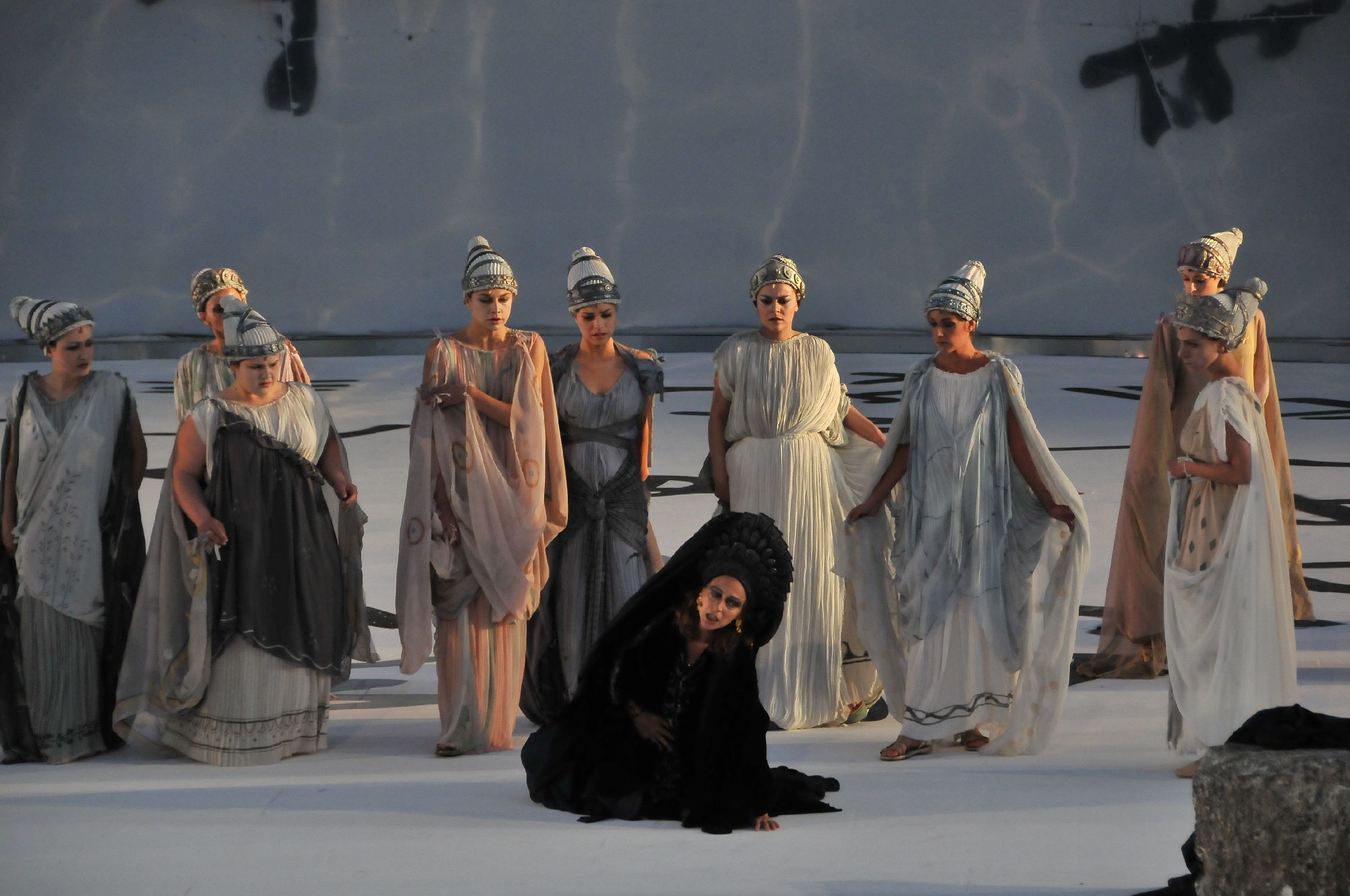
 Drama is a form of literature intended for performance by actors. In general the subject matter is narrative in character and, in the type of story traditionally considered suitable for presentation on the stage, the interplay of opposing elements usually results in a conflict. In European drama the phases of this situation are generally depicted in a sequence of scence arrenged so that each is the consequence of the preceding, until the conflicting elements reach a point of climax, after which the conflict is resolved and the play ends. This principle of design, sometimes attributed to Sopchocless, corresponds with te general norms of storytelling in Europa. In Asia acceptable modes of narrative are simpler. Eastern plays are often tissues of episodes connected chiefly by the presence of the principal characters, without any special terminal princple.
In ancient Athens the word "drama" (from dram, "to do") would recall the distinction between (the "thing done") in the course of the Eleusinian mysteries, and the mytos (the "thing said"). Ancient Greek drama never lost its connection with the cult of the Dionyusus, and Indian plays were always given under the banner of indra. But it seems clear that in the theater for which Aeschylus wrote the Oresteia, the efficient purpose of the ceremony were pretty well overshadowed by consideratios of an aesthetic and intellectual nature.
Source: English Literature in History. By: Odo Fadloeli, Drs., M.A.

such a good information yuuuu! love this one
ReplyDelete